Why e-rickshaws are switching to lithium
Walk through any charging yard today and you can hear the change. The rows of bubbling lead-acid banks are thinning out, replaced by sealed lithium boxes that charge silently in a third of the time. Drivers did not switch out of love for new technology — they switched because the arithmetic finally worked. A lithium pack costs more on day one and less on every day after: more trips per charge, no water topping, no acid burns on the floor mat, and a working life measured in years rather than months.
But lithium rewards drivers who understand it and quietly punishes those who treat it like the old lead bank. This guide covers what actually matters: how long packs genuinely last, what kills them early, the charging habits that add years, and how to check any battery — including a second-hand one — with nothing but your phone and the free BATBMS app.
Lithium vs lead-acid, honestly
Both technologies move rickshaws every day, so let us compare them without cheerleading.
| Lead-acid bank | Lithium (LiFePO4) | |
|---|---|---|
| Upfront cost | Lower | Roughly double |
| Weight for same range | ~100–120 kg | ~30–40 kg |
| Useful cycles | 300–500 | 1,500–3,000+ |
| Charge time | 8–10 hours | 2–4 hours |
| Maintenance | Water top-ups, terminal cleaning | Effectively none |
| Usable capacity | ~50% (deeper kills it) | 80–90% |
| Monitoring | Voltmeter, guesswork | Per-cell data via Bluetooth BMS |
| Cost per km over life | Higher | Lower, often by half |
The line that decides it for working drivers is the last one. Spread over its life, a lithium pack usually moves the same rickshaw for roughly half the cost per kilometre — and the 70 kg weight saving is passenger capacity you carry every single trip. The catch: those numbers assume the pack survives to old age, which is exactly what the rest of this guide is about.
How long a pack really lasts
Sellers quote cycle numbers; drivers live in months and years. Here is how to convert. One “cycle” means using and recharging 100% of the pack's capacity — two days of half-use count as one cycle, not two. A quality LiFePO4 pack is good for roughly 2,000 full cycles before it fades to about 80% of its original capacity.
A driver covering 80–100 km a day, using most of a charge, clocks around 300 full cycles a year. That is six to seven years to the 80% mark — and the pack does not die there; it just carries less. In the real world, heat and charging habits usually decide whether you see anything close to that figure. Poorly treated packs die in two years; well-treated ones genuinely reach five to seven. The difference is not luck. It is the next three sections.
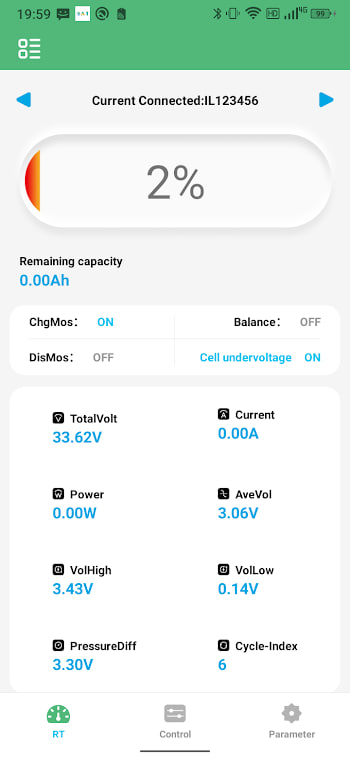
One more real-world note: capacity fade is gradual, but cell drift is not. A pack often becomes unusable not because every cell aged, but because one cell aged faster and the BMS keeps cutting power to protect it. That is why per-cell monitoring matters more than any warranty card — a weak cell is visible in the cell voltage screen months before it strands you.
What actually eats your range
When range drops, drivers blame the battery first. Often it is innocent. Work through this list in order, cheapest first:
- Tyre pressure. Soft tyres are the number-one range thief. Check weekly; the difference can be several kilometres per charge.
- Load. Range figures assume a normal load. Six passengers plus luggage on an uphill route is not the battery's fault.
- Cold mornings. Lithium delivers noticeably less below 10 °C. The capacity returns as the pack warms — it was never gone.
- A drifted gauge. If the percentage races from 100 to 60 and then crawls, the state-of-charge estimate has drifted, not the cells. One proper full charge usually fixes it — the SOC accuracy guide explains the routine.
- One weak cell. The genuine battery problem. Under load, the weak cell's voltage sags away from its siblings and the BMS cuts out early. Visible in BATBMS in thirty seconds.
- Motor and controller issues. Dragging brakes and worn bearings steal range silently. If cells look healthy in the app, look at the mechanicals.
Charging habits that add years
Nothing you do affects pack life more than how you charge. The good news: the battery-friendly routine is also the convenient one.
- Charge daily, shallowly. Lithium prefers many small charges to rare deep ones. Topping up at lunch is good for the pack, not bad.
- Avoid hitting empty. Deep discharges age cells fastest. Plan routes so you come home above 20%.
- Let the charger finish once a month. A full charge to genuine completion — charger light green and current tapered — re-anchors the fuel gauge and lets the BMS balance the cells.
- Never charge a baking-hot pack. After a hard afternoon run, give it thirty minutes in the shade first. Charging at 45+ °C is the single fastest ager.
- Use the matched charger. A cheap over-voltage charger forces the BMS to do daily emergency rescues. Protection is a safety net, not a charging strategy.
- Overnight is fine — with a caveat. The BMS and charger stop the charge safely, but charge where heat can escape, not under a blanket of cargo.
Heat, summer and parking
Heat is the silent tax on every battery in a hot climate. A pack that lives at 40 °C ages roughly twice as fast as one at 25 °C — not dramatically, just relentlessly. You cannot air-condition a rickshaw, but you can steal back years with small habits: park in shade whenever the choice exists, crack the battery compartment open while charging, keep the vents clear of dust and cloth, and check the pack temperature in the app before plugging in after a brutal run. Our temperature monitoring guide covers the exact numbers, but the working rule is simple: if the case feels hot to your palm, let it breathe before you charge it.
Buying second-hand: check before you pay
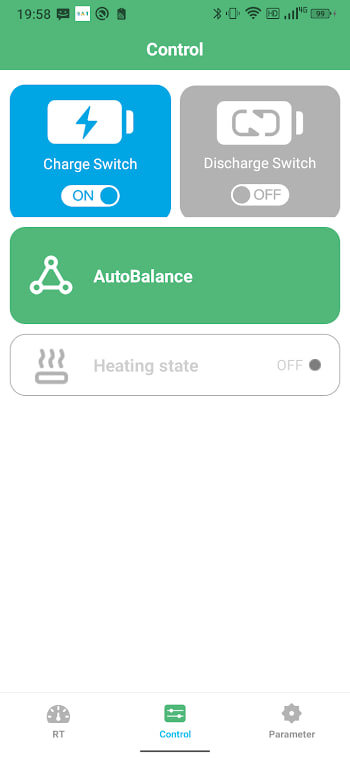
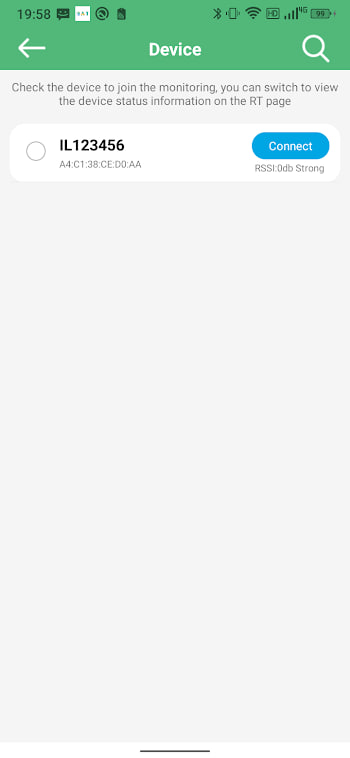
The second-hand battery market is where monitoring pays for itself. A pack's outside tells you nothing; its BMS remembers everything. Before money changes hands, connect the free BATBMS app (pairing takes a minute) and run this checklist:
- Cycle count. The odometer. 200 cycles is nearly new; 1,500 is a pack on its final stretch regardless of the shine on the case.
- Full-charge capacity. Compare the reported Ah against the label. 90% of label is fine; 70% means you are buying two-thirds of a battery.
- Cell spread at rest. All cells within a few hundredths of a volt: healthy. One cell sitting low: walk away or negotiate hard.
- Cell spread under load. Ask for a short drive with the app connected. A cell that sags visibly under throttle is the pack's death certificate.
- Protection history. Flags for repeated over-temperature or overcurrent trips suggest a hard life.
Five minutes with the app beats any verbal assurance. If the seller will not let you connect, that is itself the answer.
Locking your battery down
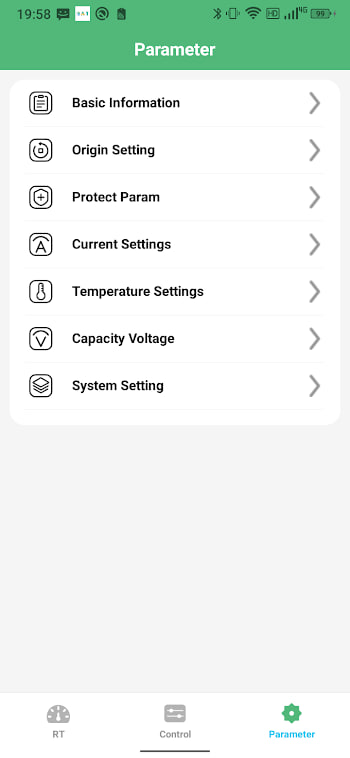
After the viral videos of e-rickshaws being switched off over Bluetooth, this section stopped being optional. The trick in those clips only works on packs whose Bluetooth accepts strangers — the digital equivalent of leaving the key in the ignition. The fix is a pairing password, set once in the app's settings, after which the pack rejects every unknown phone. It costs nothing and takes ten minutes; the password and pairing security guide walks through every step, including what to do if your BMS has no password option. If your vehicle is your income, lock the pack the same day you fit it.
Monsoon and water care
Sealed lithium boxes handle rain far better than open lead banks ever did, but “water-resistant” is not “submersible”. Deep flooded streets are the danger: water reaching the connector or a poorly sealed lid can corrode terminals and, in the worst case, bridge cell groups. After any deep-water crossing, park, switch off, and check the compartment. If water got in, do not charge until everything is dry — charging drives corrosion faster than anything. A thin smear of dielectric grease on connector pins before the season starts is cheap insurance, and while you are in the app, glance at the insulation warnings some BMS boards report.
Repair, rebalance or replace?
Every pack reaches a decision point. Here is the honest triage:
- Gauge lies but cells match: not a battery problem. Run a calibration cycle and move on.
- Cells drifted but all healthy under load: a long balancing session — or a technician's active balancer — restores the pack. Read how balancing actually works before paying anyone for magic.
- One cell sags under load: a cell-group replacement by a competent shop can be worthwhile on a young pack; on an old one it is throwing money after electrons.
- Capacity below ~70% across all cells: the pack has simply lived its life. Replace it — and this time, apply the charging habits from day one, and check the new pack's cycle count is actually zero before you pay.
A lithium e-rickshaw pack is not delicate. It asks for four things: keep it off empty, keep it cool, let it finish a charge now and then, and look at its numbers occasionally. Do that and the expensive box under the seat becomes the cheapest kilometre you have ever driven.