How the trend started
It started the way most of these things start: someone worked out that a phone app made for battery technicians could also be pointed at a stranger's e-rickshaw, and that doing it in a crowded market and filming the driver's confused face got views. Within days, clips were everywhere — a rickshaw slowing to a dead stop in traffic, the driver stepping out, tapping the dashboard, looking underneath the seat, having absolutely no idea that the reason his vehicle had died was a teenager standing twelve metres away with BAT-BMS open on his phone.
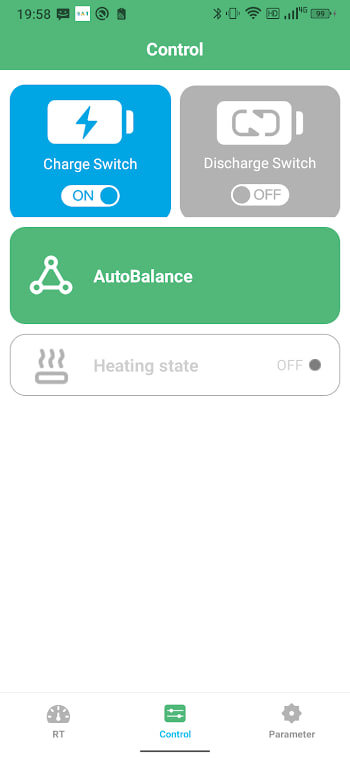
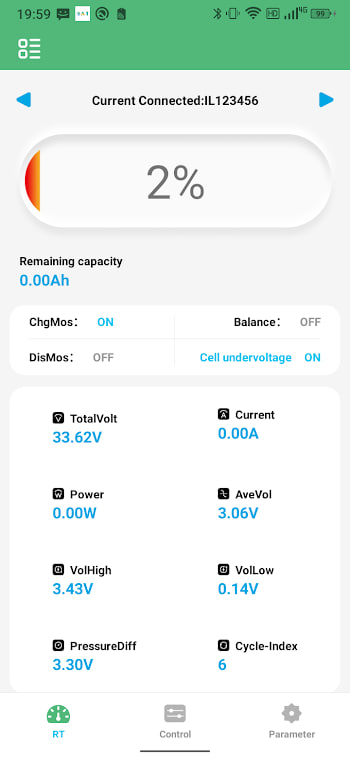
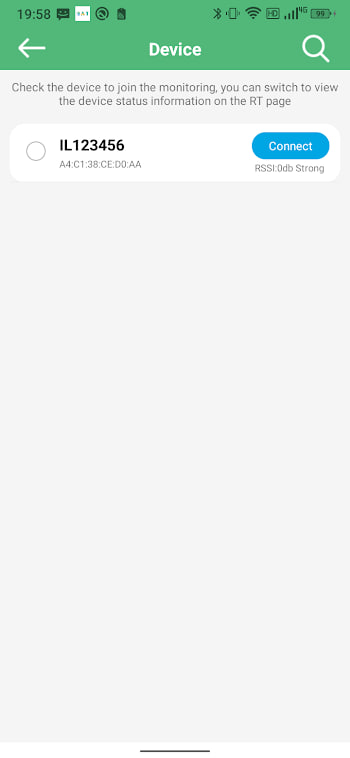
If you have read our explainer on what the app actually does, you already know the mechanism: BAT-BMS is a legitimate battery monitoring tool, and on packs whose Bluetooth was left unlocked by the factory or dealer, it can also flip the discharge switch off. No hacking skill required, no special equipment — just a free app and a battery that was never secured. That low barrier to entry is exactly why the trend spread so fast, and exactly why it needs to stop.
Who actually gets hurt
It is worth sitting with this for a second, because the video format makes it easy to skip past. The person behind the wheel of that e-rickshaw is not a character in a prank video. He is very often someone who rented the vehicle for the day and owes the owner a fixed sum regardless of how much he earned. He gets paid by the ride, not by the hour. Every minute spent pushing a dead rickshaw off the road, waiting for it to reset, or walking it to a mechanic is a minute he is not making money — and for a lot of these drivers, that lost hour is the difference between a normal day and a day where the family cannot cover dinner.
One driver's story that made the news during this trend: he had to push his rickshaw, alone, for six or seven kilometres to reach a service centre, having no idea his battery had simply been switched off by someone nearby rather than actually failed. That is not an exaggeration for effect. That is what "just a prank" costs someone who has no financial cushion to absorb it.
Why this is not "just a glitch"
Part of what makes people comfortable filming this is the framing that the rickshaw "glitched" or "broke down" — language that quietly removes the person doing it from the story. Be precise about what is actually happening: a person deliberately connects, without permission, to a device that does not belong to them, and deliberately issues a command to disable it while it is in use. That is not a glitch. That is a real feature of a real system being used exactly as intended, just aimed at someone who never agreed to it.
And the safety angle matters more than the videos let on. An e-rickshaw does not always stall gently at a standstill. Losing power mid-manoeuvre, while pulling into traffic, or on an incline, can genuinely put the driver, any passengers, and nearby vehicles at risk. "It is funny because nobody got hurt this time" is not the same as "it is safe."
What the law actually says
This stopped being a grey area the moment India's Ministry of Electronics and Information Technology (MeitY) got involved. Here is where things stand, in plain terms rather than legal jargon:
- Section 66 of the Information Technology Act, 2000 covers hacking and unauthorised access to a computer system carried out with dishonest or fraudulent intent — and a BMS controlled over Bluetooth counts. The punishment on the books is up to three years' imprisonment, a fine of up to ₹5 lakh, or both.
- Section 43 of the IT Act covers unauthorised access to, or damage caused to, someone else's computer system, and can attract compensation liability that runs much higher — up to ₹1 crore in serious cases.
- Sections dealing with mischief under the Bharatiya Nyaya Sanhita (BNS), 2023 — the law that replaced the old IPC — cover intentionally causing wrongful loss to a person's property or its usefulness, which squarely fits stopping a working vehicle mid-use.
None of this requires the app itself to be illegal, and it is worth being precise here: BAT-BMS is a legitimate tool built for technicians and battery owners, and following the security concerns it was pulled from the Google Play Store and Apple App Store by its developer. The law is not really about the app at all. It is about what a person chooses to do with access they were never given, and the penalties above attach to the person doing the switching-off, not to the tool.
It is already leading to arrests
This is not a hypothetical warning. During this trend, police in Ujjain, Madhya Pradesh, detained a person for allegedly using BAT-BMS to disable e-rickshaws and then posting the footage online. Posting the video is, if anything, the part that makes a police case easier to build, not harder — it is a timestamped confession with your own face in the frame. A clip made for laughs on a group chat has already become evidence in a criminal complaint for at least one person. There is no reason to assume that stops at one case.
The "it is just a prank" excuse does not hold up
Every version of this defence falls apart under about ten seconds of scrutiny:
- "I did not damage anything." You do not need to break a device to be liable for mischief or unauthorised access — interfering with its function while someone is relying on it is enough, and it cost that driver real time and real money regardless of whether the battery itself is fine afterward.
- "He got it working again eventually." The harm is not permanent damage to the battery. The harm is the lost fare, the lost hour, the fear the next time the vehicle behaves oddly.
- "Everyone is doing it." Plenty of people were filmed doing it. That is precisely why MeitY, the app stores, and now the police in at least one state got involved. Popularity is not a defence; if anything it is why enforcement started.
- "It is the battery company's fault for not locking it." A vulnerability existing is a reason to fix the vulnerability — which is exactly why we wrote our pairing password guide — not a licence to exploit it against a stranger.
What to do with this knowledge instead
If you know how this exploit works, you are actually in a good position to do something useful with that knowledge rather than something that could land you in a police station. Two constructive options, both genuinely more satisfying than a viral clip that ages badly:
- Tell drivers you know to lock their own battery. Ten minutes with our password and pairing security guide closes the exact gap these videos exploit, permanently.
- If you have already been the person doing this, stop, and consider that deleting the videos does not delete the fact that they exist somewhere, cached, screenshotted, or already reported. The safest version of this story is the one where it never happened again after today.
If you are on the other side of this — a driver whose e-rickshaw has actually been switched off by someone nearby — we have a dedicated step-by-step recovery guide covering exactly what to do, in what order.